
Für Gründer von Fintech, Quant-Analysten, Web3- und Web2-Finanzingenieure und Forschungsteams: Diese Fallstudie zeigt, wie ein Makroterminal die Dateninfrastruktur von der Interpretation trennen und gleichzeitig die Kontrolle über das benutzerorientierte Produkt behalten kann.
Zusammenfassung
Der Aufbau eines institutionellen Finanzterminals bedeutet in der Regel, einen großen Daten-Engineering-Stack zu pflegen, bevor die Benutzer jemals ein Dashboard sehen.
AXIOM FX, an open-access G8 currency macro research terminal, avoids turning that backend work into the product. By using FXMacroData as a structured data layer, AXIOM FX can focus its resources on proprietary analysis, front-end presentation, and research methodology.
Die Herausforderung: Schaffung einer skalierbaren Makroinfrastruktur für verschiedene globale Serien wie Position der COT, Zentralbankpolitik, Carry-Metrics, Kalender und Cross-Asset-Kontext.
Die Lösung: Die Struktur-API von FXMacroData als Infrastrukturschicht unter dem Terminal verwenden.
Das Ergebnis: Ein hoch auditierbares, multi-Flächen Finanzforschungsterminal, das ein schlankes Team betreiben kann, ohne jede Datenpipeline intern zu besitzen.
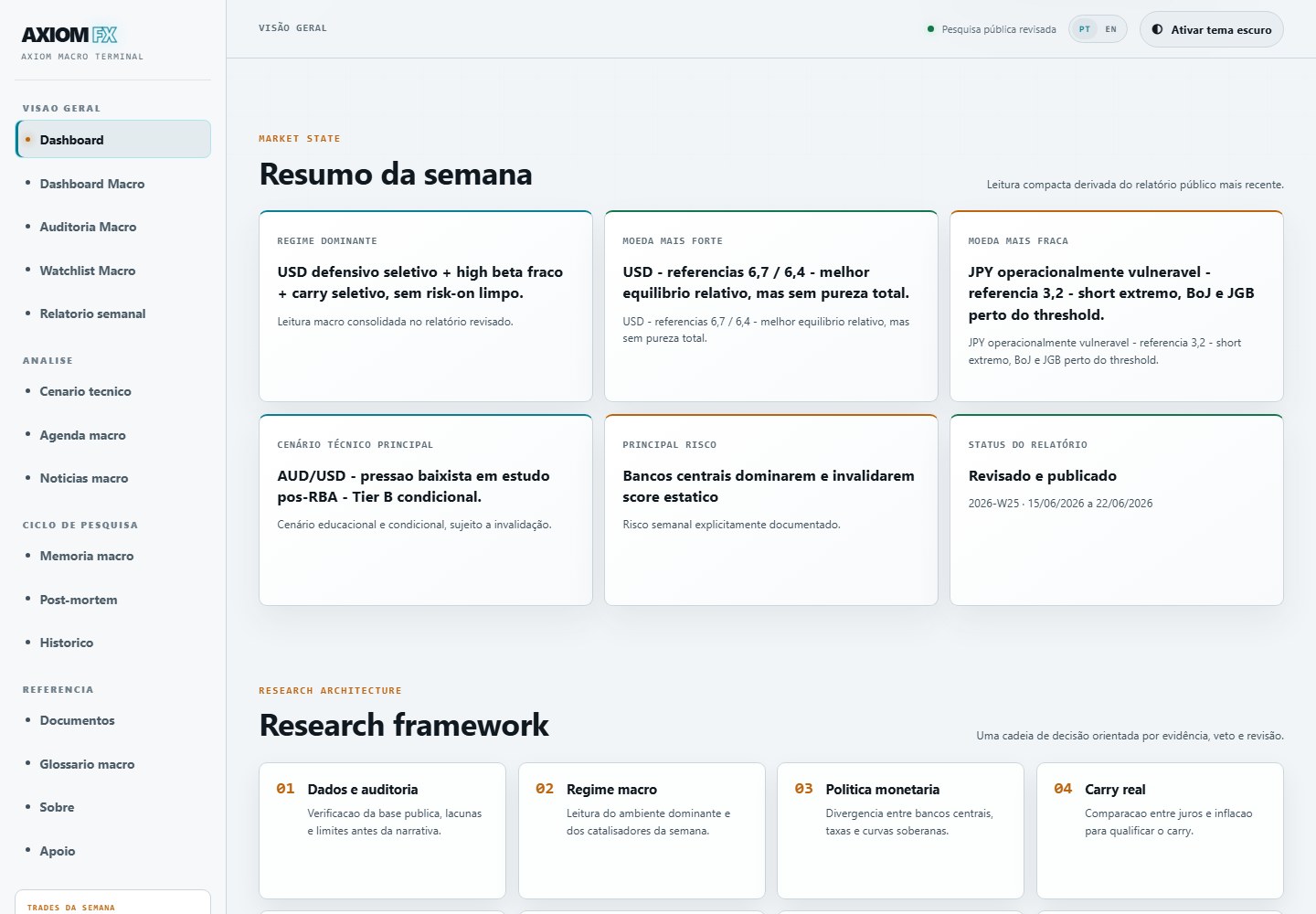
Die Architektur: Entkoppeln von Infrastruktur und Interpretation
Ein ausgereiftes Finanzprodukt benötigt eine strikte Arbeitsteilung zwischen Datenaggregation und Marktbeurteilung.
Anwendungsschicht: AXIOM FX
Benutzeroberfläche, proprietäre Rankings, analytisches Urteilsvermögen, wöchentliche Zusammenfassungen, Auditseiten, öffentliche Berichte und bedingte Forschungsmodelle.
Dateninfrastruktur: FXMacroData
ETL-Pipelines, Schema-Standardisierung, Makrodatensätze, Kalenderkontext, Positionsdaten, Marktreihen und API-Lieferung.
1. Die Einnahme-Schicht: FXMacroData
FXMacroData fungiert als grundlegender Datenstruktur unter dem Terminal. Es liefert standardisierte, FX-zentrierte Makrodatensätze direkt an Client-Anwendungen, wodurch die Notwendigkeit eines manuellen Scraping, einer einmaligen Formatnormalisierung und einer vorgelagerten Wartung verringert wird.
Für ein Terminal wie AXIOM FX kann dieses Datengewebe die wiederkehrenden Quellen des Makrokontexts abdecken, die für die Währungsforschung wichtig sind: COT-Positionierung, Überwachung der Zentralbankpolitik, Zinsentscheidungshistorien, Carry-Trade-Kontext, Wirtschaftskalender und Kreuzvermögensmarktreihen.
2. Die Anwendungsschicht: AXIOM FX
AXIOM FX verbraucht diese strukturierte Ebene und verwandelt sie in ein öffentliches Forschungsergebnis. Das Terminal präsentiert Dashboards, wöchentliche G8-Regime-Briefs, institutionelle PDFs, technische Szenarien, öffentliche Artefakte und Prozessüberprüfungoberflächen. FXMacroData unterstützt die Datenschicht; AX IOM FX behält das volle Eigentum an den endgültigen Marktschlussfolgerungen.
Die Datenintegrität und -bereitstellung sind Infrastrukturbedenken. Ranking-Währungen, Beschreibung von Regimes, Veto-Szenarien und die Entscheidung, was in der wöchentlichen Zusammenfassung gehört, sind Entscheidungen auf der Anwendungsebene.
Datenumsetzung und Terminal-Arbeitsplatz
Anstatt statische Artikel anzuzeigen, kartografiert AXIOM FX Makro-Eingänge über mehrere Frontend-Oberflächen.
| Funktionsbereich | Abhängigkeit der Datenschicht | Lieferung von Terminal-Front-End |
|---|---|---|
| Makro-Dashboards | Globale Makro-Veröffentlichungen Wirtschaftskalender Veranstaltungen und Spot-/Cross-Marktreihen. | Live-Überwachungslisten, Makrodashboards und Audit-Seiten für verschiedene Aktiva. |
| Forschungsrahmen | Aggregierte COT-Sentiment, Politikregime und Berechnungsindikatoren. | Wöchentliche G8-Regime-Briefs, institutionelle PDFs und Makroscoring. |
| Prüfungsspuren | Historische Marktreihen und Kontext der Verfügbarkeit von Datenpunkten. | Benutzeroberflächen-Prozessmarker, Datenlücken und ein Veto-Szenario nach der Tötung. |
UI Spotlight: Entwurf für die Auditabilität
Eine Kernstärke des AXIOM FX Terminals ist sein Transparenzstandard. Anstatt nur eine endgültige Marktansicht zu veröffentlichen, zeigt die Plattform Prozessbeschränkungen direkt in der Benutzeroberfläche auf: untersuchte Szenarien, Veto-Strategien, bekannte Datenlücken und Überprüfungsstatus.
Komponente der Prüfspur: Studierte Szenarien. Veto-Strategien. Bekannte Datenlücken.
Durch die Platzierung von Veto und Lücken neben aktuellen Forschungsergebnissen erleichtert AXIOM FX den Benutzern, den Rohdatenkontext von der Analyse der Analysten zu trennen.
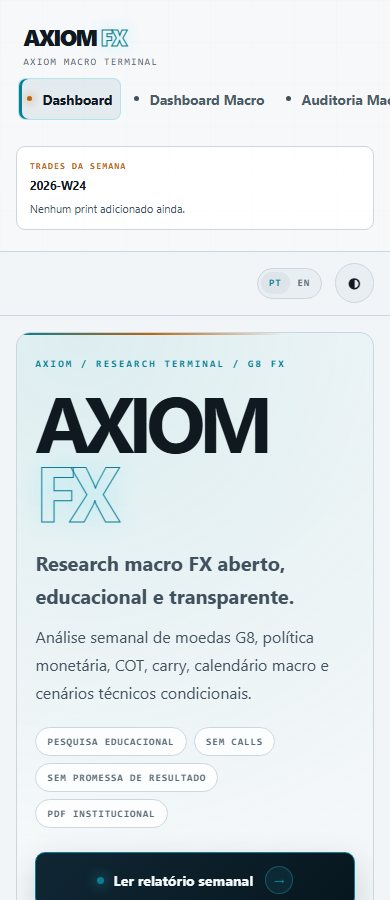
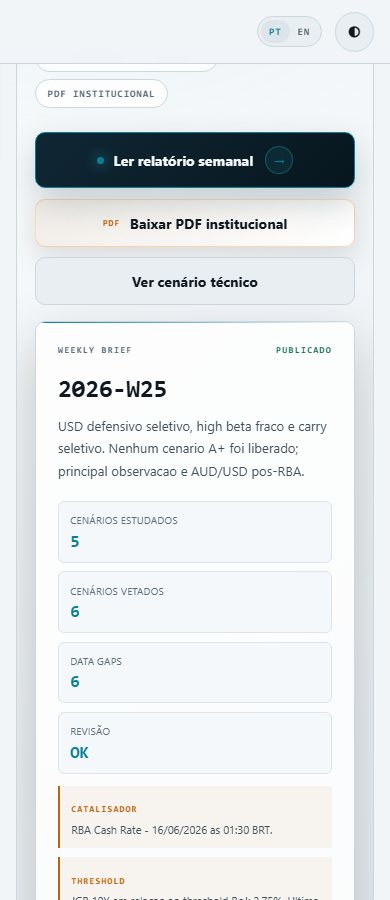
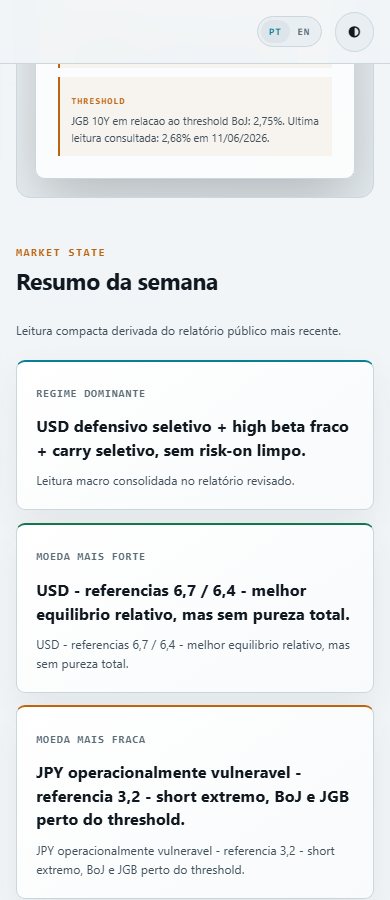
Beispiel: Von der Datenschicht zur Forschungsansicht
Die AXIOM FX Homepage zeigt, wie die Architektur zu einem brauchbaren Produkt wird. Ein wöchentliches Briefing kann eine defensive USD-Hintergrund, hohe Beta-Schwäche, selektive Übertragung oder eine bedingte AUD/USD Einrichtung nach einem RBA FXMacroData kann den Makrodatenkontext unter dem Workflow unterstützen; AXIOM FX entscheidet, wie die endgültige Forschung erfasst, erstellt und veröffentlicht wird.
Diese Trennung ermöglicht AXIOM FX, seine eigene Stimme und Methodik zu behalten, während er den Aufwand vermeidet, jede Makropipeline von Grund auf neu zu bauen.
Die Entwickler-Ausnahme: Hören Sie auf, die Datenschicht neu zu bauen
Für Fintech-Entwickler, Quant-Fonds und Finanzplattformen zeigt AXIOM FX ein wiederholbares Architekturmuster: Verwandeln Sie die Datentechnik nicht in Ihr Kernprodukt, es sei denn, die Datenengineering ist das Geschäft.
Durch die Verwendung von FXMacroData als strukturierte Quellschicht können Teams die Time-to-Market- und Infrastruktur-Overhead-Kosten senken und gleichzeitig die Kontrolle über ihre Front-End-Branding-, Scoring-Logik-, Forschungsmethodik- und Benutzererfahrung behalten.
Bereitstellen eigener Makro-Tools
Erforschen Sie das Live-Axiom FX-Terminal unter Die Kommission hat die Kommission aufgefordert,. Erfahren Sie mehr über die Implementierungsmuster in der Mit FXMacroData-Vitrine erstelltBereit zum Bauen? Holen Sie sich heute noch Ihre API-Schlüssel- Ich weiß .
