
Pour les fondateurs de fintech, les analystes quantistiques, les ingénieurs financiers Web3 et Web2 et les équipes de recherche: Cette étude de cas montre comment un terminal macro peut séparer l'infrastructure de données de l'interprétation tout en conservant le contrôle du produit orienté vers l'utilisateur.
Résumé
La construction d'un terminal financier de niveau institutionnel signifie généralement maintenir une grande pile d'ingénierie de données avant que les utilisateurs ne voient un tableau de bord. Les équipes doivent ingérer des indicateurs macroéconomiques mondiaux, normaliser les formats, suivre les révisions, les calendriers de cartes, surveiller la disponibilité et maintenir les séries de marché à jour dans toutes les devises.
Axiom FX est une société, an open-access G8 currency macro research terminal, avoids turning that backend work into the product. By using FXMacroData as a structured data layer, AXIOM FX can focus its resources on proprietary analysis, front-end presentation, and research methodology.
Le défi: Construire une macro-infrastructure évolutive pour diverses séries mondiales telles que Positionnement du COT, la politique de la banque centrale, les métriques de report, les calendriers et le contexte des actifs.
La solution: Utilisez l'API structurée de FXMacroData comme couche d'infrastructure sous le terminal.
Le résultat: Un terminal de recherche financière hautement auditable et multi-surface qu'une équipe de base peut exploiter sans posséder chaque pipeline de données en interne.
L'architecture: déconnecter l'infrastructure de l'interprétation
Un produit financier mature nécessite une division stricte du travail entre l'agrégation des données et le jugement du marché.
Couche d'application: AXIOM FX
Utilisateur/UX, classement propriétaire, jugement analytique, résumés hebdomadaires, pages d'audit, rapports publics et modèles de recherche conditionnels.
Infrastructure de données: FXMacroData
Les pipelines ETL, la normalisation du schéma, les ensembles de données macro, le contexte du calendrier, les données de positionnement, les séries de marché et la livraison d'API.
1. la couche d'ingestion: FXMacroData
FXMacroData agit comme le tissu de données de base sous le terminal. Il fournit des ensembles de données macro standardisés et centrés sur FX directement aux applications clients, réduisant ainsi le besoin de grattage manuel, de normalisation du format unique et de maintenance en amont.
Pour un terminal comme AXIOM FX, ce tissu de données peut couvrir les sources récurrentes de contexte macro qui sont importantes pour la recherche sur les devises: le positionnement COT, suivi de la politique de la banque centrale, les antécédents de décision de taux, le contexte des transactions de carry-trade, les calendriers économiques et les séries de marché croisées d'actifs.
2. la couche d'application: AXIOM FX
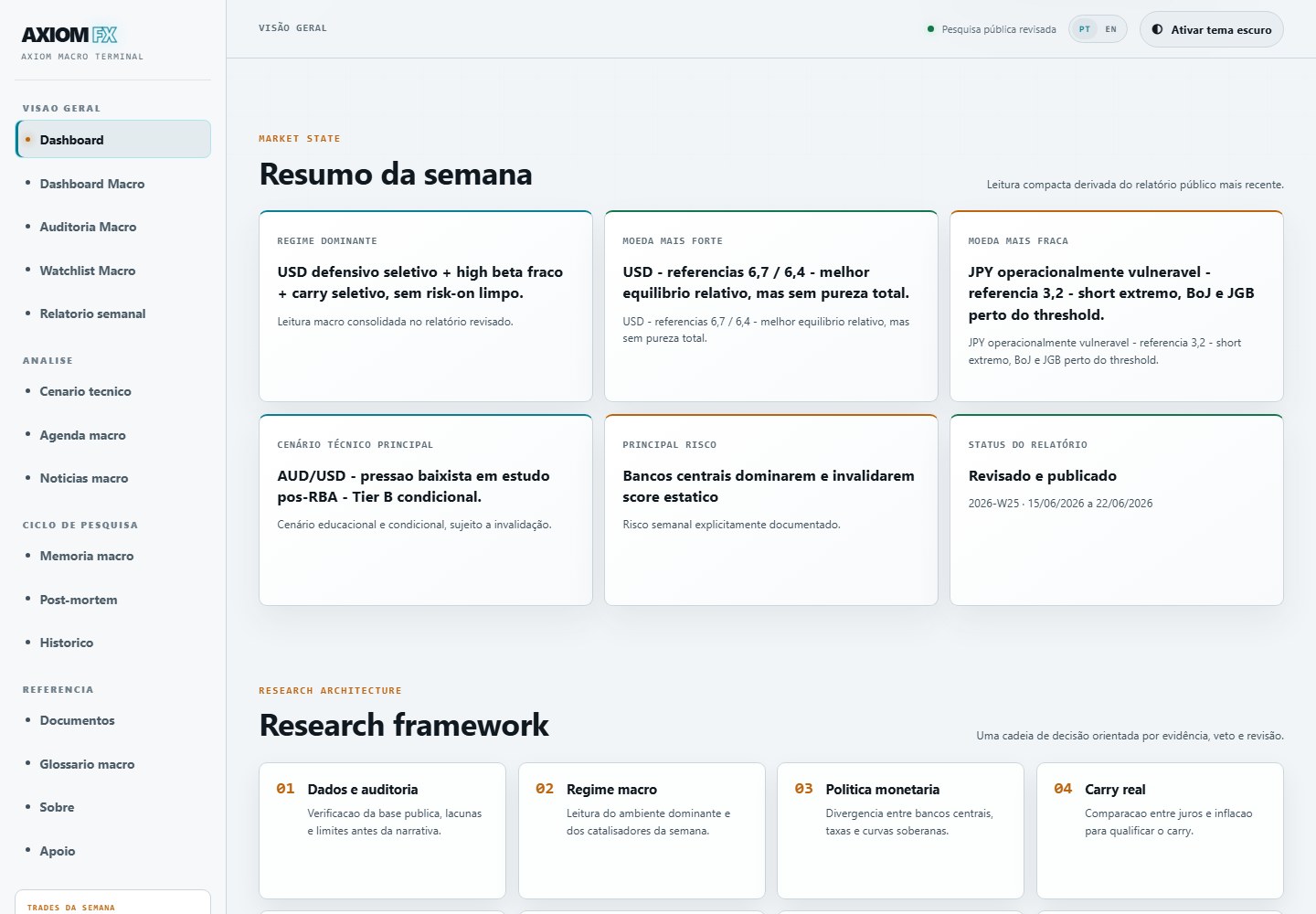
AXIOM FX consomme cette couche structurée et la transforme en un produit de recherche public. Le terminal présente des tableaux de bord, des rapports hebdomadaires du régime du G8, des PDF institutionnels, des scénarios techniques, des artefacts publics et des surfaces d'examen des processus. FXMacroData prend en charge la couche de données; AX IOM FX conserve la pleine propriété des conclusions finales du marché.
Cette distinction est le point de l'architecture. L'intégrité des données et la livraison sont des préoccupations d'infrastructure. Classer les devises, décrire les régimes, opposer son veto aux scénarios et décider ce qui appartient au résumé hebdomadaire sont des décisions de la couche application.
Mise en œuvre des données et espace de travail du terminal
Au lieu d'afficher des articles statiques, AXIOM FX cartographie les entrées macro sur plusieurs surfaces de front-end.
| Zone fonctionnelle | Dépendance de la couche de données | Livraison à l'avant du terminal |
|---|---|---|
| Tableaux de bord macro | Les macro-versions mondiales calendrier économique événements et séries de marchés au comptant/cross. | Des listes de surveillance en direct, des tableaux de bord macro et des pages d'audit croisées. |
| Cadre de recherche | Les résultats de l'analyse de la situation des entreprises sont publiés dans le rapport annuel annuel de l"entreprise. | Rapports hebdomadaires du régime du G8, fichiers PDF institutionnels et notation macro. |
| Suivi des vérifications | Séries historiques de marché et contexte de disponibilité des points de données. | Des marqueurs de processus d'interface utilisateur, des lacunes de données, et des scénarios post-mortem. |
Utilisateur de l'information: conception pour la vérifiabilité
Une des principales forces du terminal AXIOM FX est sa norme de transparence. Plutôt que de publier uniquement une vue finale du marché, la plateforme expose les contraintes de processus directement dans l'interface utilisateur: scénarios étudiés, stratégies mises à l'écart, lacunes de données connues et statut d'examen.
Composition de la piste d'audit: Des scénarios étudiés. Des stratégies à veto. Des lacunes de données connues.
En plaçant des veto et des lacunes à côté des recherches actuelles, AXIOM FX facilite la séparation du contexte des données brutes de l'interprétation par l'analyste.
Exemple: de la couche de données à la vue de recherche
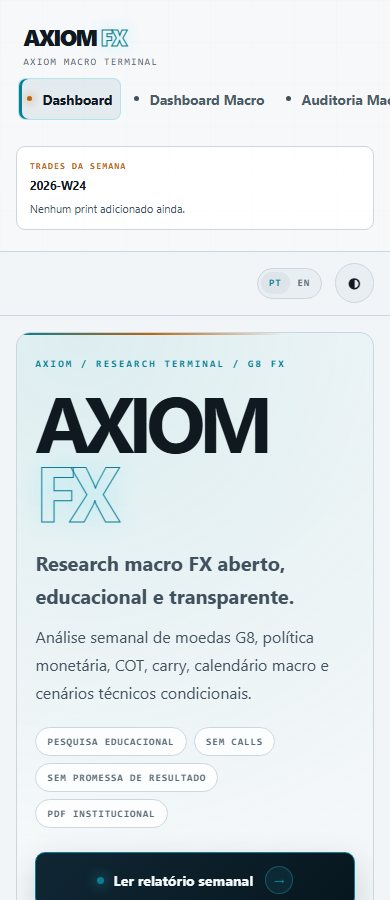
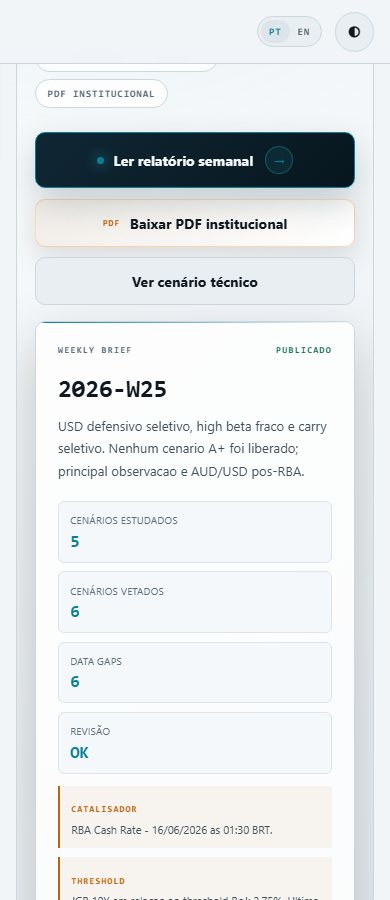
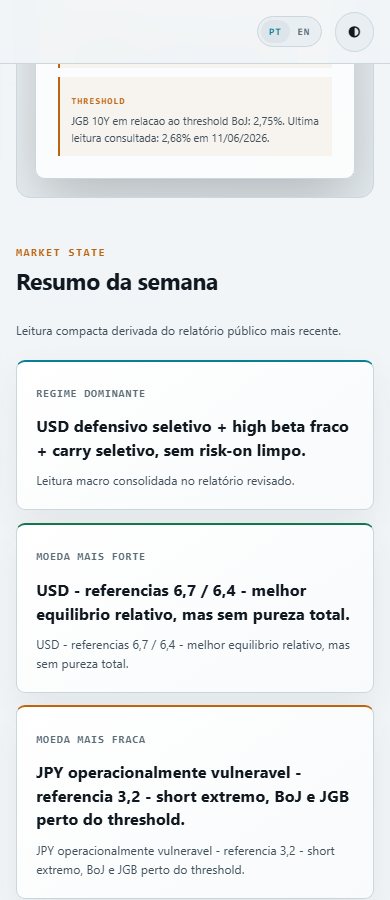
La page d'accueil d'AXIOM FX montre comment l'architecture devient un produit utilisable. AUD/USD - Je suis prêt . RBA FXMacroData peut prendre en charge le contexte de données macro sous le flux de travail; AXIOM FX décide de la façon de noter, encadrer et publier la recherche finale.
Cette séparation permet à AXIOM FX de conserver sa propre voix et sa méthodologie tout en évitant la traînée de reconstruire chaque pipeline macro à partir de zéro.
Le développement de la prise en charge: Arrêtez de reconstruire la couche de données
Pour les développeurs de technologies financières, les fonds quantiques et les plateformes financières AXIOM FX démontre un modèle architectural répétable: ne transformez pas l'ingénierie des données en votre produit principal à moins que l' ingénierie de données ne soit l'activité.
En utilisant FXMacroData comme couche source structurée, les équipes peuvent réduire les frais généraux de mise sur le marché et d'infrastructure tout en conservant le contrôle de leur marque front-end, de la logique de notation, de leur méthodologie de recherche et de l'expérience utilisateur.
Déployez vos propres outils de macro
Explorez le terminal AXIOM FX en direct à Je suis désolé.. Découvrez d'autres modèles de mise en uvre dans le Construit avec FXMacroData vitrinePrêt à construire ? Obtenez vos clés API aujourd'huiJe suis désolé .
